
Blinds vs Curtains for Indian Homes: Which One Should You Choose?
-
23 Jun 2026
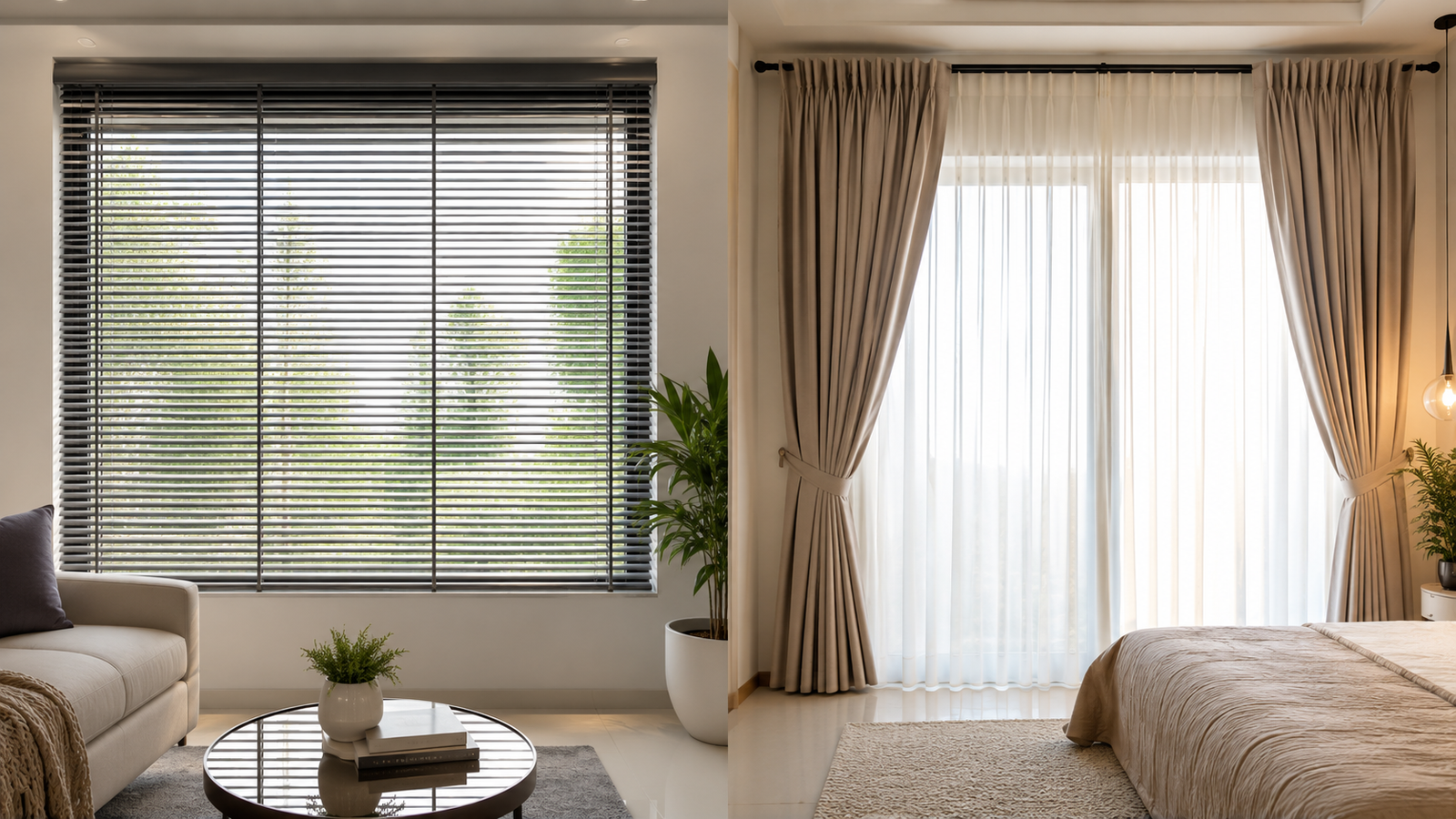
Most people do not start looking for window
blinds because they want one more decor product. They usually begin with a
practical problem: harsh sunlight, glare on a screen, lack of privacy, a dusty
curtain setup, a compact room, a balcony door that is difficult to dress, or a
window that looks unfinished. The right blind solves that room problem first
and improves the look of the space second.
Indian homes also need a more careful
answer than generic international decor advice. A window may have grills,
shallow aluminium frames, uneven plaster, tiles around the edge, AC pipes,
balcony tracks, road dust, neighbouring buildings close by and furniture placed
directly below the sill. A made-to-measure blind has to work with that real
window, not with a perfect showroom display.
Quick answer
The best answer for blinds vs curtains
India depends on deciding whether blinds or curtains make more sense for
compact Indian homes. Start with the room problem, then choose the fabric
behaviour or blind mechanism that solves it. Colour and style matter, but they
come after privacy, daylight, mounting style, cleaning and measurement. This
order is especially important for made-to-measure blinds because the final
product is manufactured for the exact details submitted by the buyer.
What this choice really involves
A buyer comparing blinds vs curtains India
is usually balancing three questions at the same time. Will the blind solve the
room problem? Will it look right with the rest of the interior? Can it be
measured and installed safely without creating a wrong-size custom order? A
good decision handles all three questions together.
The most common mistake is to treat blinds
as a single product category. Roller, Roman, Zebra, Vertical, Wooden Venetian,
Honeycomb, Double Roller and Imported Designer options behave differently. Some
filter light, some block light, some tilt, some fold, some move sideways and
some work better for large openings. The right choice depends on how the room
is used each day.
How this applies to Indian homes
The blinds-versus-curtains debate is
usually framed badly. Curtains are not useless, and blinds are not
automatically superior. The better question is: what does the room need, and
what does the window allow? Indian homes often have compact rooms, furniture
below windows, dusty balconies, grills and narrow wall returns. Those
conditions frequently favour blinds because blinds stay close to the opening
and use less visual space.
Curtains still have a role. They add
softness, absorb some sound, frame a large wall and create a warmer bedroom or
formal living room. In a spacious room, full-height curtains can look expensive
and comfortable. The weakness appears when the room is small, the curtain falls
behind a sofa, fabric touches a kitchen counter, or washing becomes a repeated
burden. In those situations, a blind can be the cleaner functional answer.
Blinds win where daily usability matters. Roller Blinds give a clean panel. Zebra Blinds give adjustable bands. Wooden Venetian Blinds give slat tilt control.
Vertical Blinds manage wide doors. Roman Blinds give fabric softness without
requiring full curtain stacks on both sides. The advantage is not just design;
it is control over light, privacy and space.
The smartest interior solution can be a
combination. Use the blind as the functional layer near the glass and add
curtains only where the room needs softness or night-time depth. This is
particularly effective in bedrooms and premium living rooms. It avoids the
mistake of using heavy curtains alone for every window, even where the window
is small or blocked by furniture.
A practical comparison also discusses
cleaning honestly. Curtains usually require removal, washing, drying and
rehanging. Many blinds need routine dusting or careful wiping, depending on
material. Neither is maintenance-free. The difference is that blinds can often
be maintained in place, which matters in dusty cities and busy homes.
Best options to consider
Use the shortlist below as a practical
starting point, not as a blind rule. The final choice should still be checked
against window size, wall surface, privacy level, room direction and
maintenance expectations.
· Roller Blinds for clean minimal coverage and
easier daily handling.
· Roman Blinds when the customer wants softness
without full curtain bulk.
· Zebra Blinds when adjustability and a modern
look matter.
· Wooden Venetian Blinds when slat tilt control
is preferred.
·
Curtain and blind combos for
layered interiors where softness and function are both required.
The strongest choice for blinds vs curtains
India is the option that removes the most important compromise. If the room is
too bright, glare control matters first. If privacy is weak, opacity and
mounting coverage matter first. If the window is wide or used as a passage,
operation matters first. If the room is formal, fabric finish and proportion
matter first.
Decision framework before ordering
A clean buying path is simple. First decide
what the room needs. Then shortlist the blind behaviour that solves that need.
Then check whether the window can physically take the chosen fit type. Then
order samples where fabric appearance matters. Finally, use the How to Measure guide before entering
dimensions. This reduces the risk of choosing a blind that looks good online
but fails in the actual room.
Fit type changes both the appearance and
the performance of the blind. Recess Fit looks cleaner when there is enough
depth and the opening is reasonably even. Face Fit can give better coverage
around the window and is often more forgiving where Indian windows have shallow
frames, grills or uneven plaster. Frameless Fit needs a secure fixing surface
and more caution because the bracket has less obvious support from a
surrounding frame.
DIY Custom Blinds makes blinds to the
measurements entered at the time of order. That is why width, drop, fit type,
control side and fabric choice deserve careful checking before checkout. Wrong
customer measurements, wrong mount-style selection and colour decisions made
without samples cannot be treated like ordinary stock-product returns. The
safest sequence is to compare the correct product category, order fabric
samples if appearance or opacity matters, measure carefully and then place the
custom order.
Fabric, colour and sample checks
Fabric samples are not a formality in
online blind buying. Colour changes under different wall paint, natural light
and warm indoor lighting. Texture also matters because a smooth fabric, a
technical sunscreen weave and a softer decor fabric can make the same colour
family feel very different. The Free
Sample Kit helps the buyer check colour, texture and light behaviour
inside the actual room before committing to a made-to-measure blind.
For bright rooms, test the sample during
the strongest sunlight hour. For bedrooms, test the fabric after dark with the
room lights switched on. For offices, view the sample near the actual
workstation or cabin glass. For kitchens and bathrooms, check not only colour
but also whether the material is suitable for the expected moisture, steam or
grease conditions.
Measurement, fit and control-side checks
Measure width and drop carefully, and
measure more than once. Check whether the product page asks for finished size,
opening size or another measurement format. Keep the unit consistent. Do not
mix inches, centimetres and millimetres casually. The more precise the
measurement process, the lower the risk of a blind that is slightly too narrow,
too long or difficult to operate.
The control side also deserves attention. A
chain or control mechanism should not clash with a wall corner, bed, sofa,
table, kitchen counter, door handle or balcony movement path. For elderly users
or children in the home, accessibility and safe operation matter. A correct
control-side selection can make the same blind feel much more convenient every
day.
Where another option may be better
Curtains are useful where softness, framing
and warmth matter. Blinds are useful where space, light control and daily
maintenance matter. The best answer is not ideological. It is based on the
room. A small apartment bedroom with a desk below the window may benefit from
blinds. A large formal living room may still benefit from side curtains. A
layered answer can often deliver both function and softness.
For dusty cities and road-facing windows,
cleaning effort is a serious buying factor. Curtains often need removal,
washing, drying and rehanging. Many blinds can be dusted or wiped in place
depending on the material. This does not make every blind maintenance-free, but
it can make daily upkeep more realistic for busy homes.
A good blind decision should remove
unsuitable options early. If the room has heavy moisture or cooking grease,
delicate fabric is risky unless the product specification clearly supports that
environment. If the room needs night privacy, a daytime sunscreen solution
alone may not be enough. If the opening is very wide, operating style and panel
movement may matter more than the colour of the fabric. If the room is compact,
visual bulk matters as much as light control.
Long-term value is also different from the
lowest visible price. A blind that fits correctly, operates smoothly, matches
the room's privacy need and can be maintained without daily frustration is
usually better value than a cheaper option that leaves light gaps, blocks a
handle, gathers dust badly or looks temporary. For custom blinds, careful
selection before ordering is part of the value.
The online model works best when the buyer uses the guidance instead of guessing. Product pages show available categories and configurations. Samples reduce uncertainty about fabric. Measurement pages reduce sizing risk. Installation pages reduce fixing anxiety. Support routes help with genuine pre-purchase doubts. The result is a more controlled buying process than a showroom visit where the final choice may depend on whatever fabric is being pushed that day.
How to compare online without showroom confusion
A showroom can be useful, but it can also
push whatever stock or margin is easiest to sell. A structured online process
gives the buyer time to compare rooms, fabrics, dimensions and policies without
pressure. The key is to avoid guessing. Use product pages for category
comparison, samples for fabric confidence, measurement guidance for sizing, and
installation guidance for fixing.
For a practical next step, compare the
relevant product category on DIY Custom Blinds, use the Free
Sample Kit if fabric appearance is uncertain, check the How to Measure guide, and review the
installation guide that matches the selected fit type. The FAQs
and Blinds Studio pages can also help when the buyer is still
comparing room styles, product behaviour and common buying doubts.
Common mistakes to avoid
·
Choosing colour before deciding
whether the room needs blockout, sunscreen, light filtering, adjustable bands,
slats, soft folds or vertical movement.
·
Measuring only the glass
instead of the full coverage area required for the selected fit type.
·
Ignoring grills, handles,
tiles, curtain rods, sliding tracks, AC pipes, furniture or control-chain
access.
·
Assuming daytime privacy
automatically means night privacy.
·
Skipping fabric samples when
colour, texture or room lighting could change the final look.
·
Treating a custom-made blind
like a standard ready-made product after production has started.
Best-fit recommendation
For most customers researching blinds vs
curtains India, the safest path is to shortlist two or three suitable blind
types, order samples where fabric or colour matters, then measure and configure
the exact product only after checking the window physically. This reduces
wrong-product risk and wrong-measurement risk at the same time.
DIY Custom Blinds is designed around that
process. The buyer chooses the blind type and fabric, uses guidance to measure
the window, places a prepaid custom order and installs the delivered blind
using DIY instructions or local help where drilling is preferred. This keeps
the model practical for Indian homes while avoiding unnecessary showroom
dependency.
Ready to choose the right blinds?
Measure. Choose. Install. Start with fabric
samples, compare the relevant product category, use the measurement guide, and order only after
confirming width, drop, fit type, control side and fabric. That is the cleanest
path from online browsing to a custom blind that fits the room and solves the
actual window problem.
FAQs
Are blinds easier to clean than curtains?
For routine dusting, many blinds can be
maintained in place more easily than curtains, but the cleaning method depends
on blind type and material.
Can I use blinds and curtains together?
Yes. A blind can handle function near the
glass while curtains add softness, warmth and a layered finish.
Do blinds look too office-like?
Not if the right product, fabric and colour
are chosen. Roman, Zebra and textured Roller Blinds can look warm and residential.
Should I order samples before choosing blinds vs curtains India?
Yes. If colour, texture, opacity or room
lighting matters, the Free Sample Kit is the safest step before
placing a made-to-measure order.
Can I return a custom blind if I measure incorrectly?
No. A blind made to customer-provided
measurements is not normally returnable for wrong width, drop or mount style.
Measure carefully before ordering.